
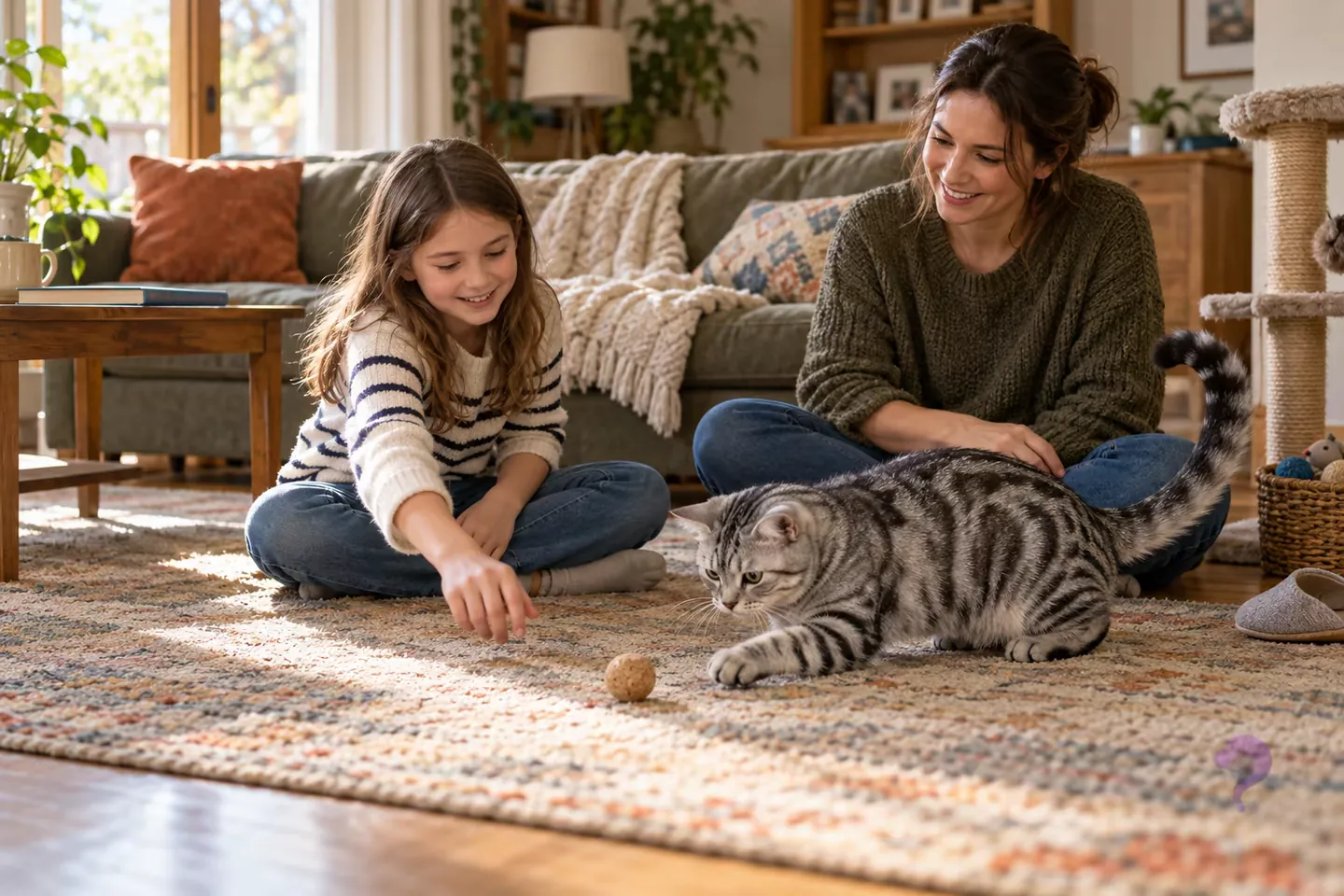
The short answer: the best pet is a family pet, not a child's project
The best pet for a child is one the adults also want and can care for every day. A calm adult dog or cat may suit one family. Another may enjoy keeping a pair of guinea pigs or rats. Fish and birds can be fascinating, but their care is more specialised than many people expect.
Start with your whole household, not a list for a particular age. Think about how much handling the child expects, how much work the adults can reliably do, the space and noise you can live with, allergies, hygiene, cost, holidays, and the animal's lifespan. A ten-year-old can help, but they cannot promise what life will look like when they are sixteen.
There is also no species, breed, or age that guarantees safe behaviour around children. Choose the individual animal carefully, teach gentle boundaries, and supervise contact. Sometimes the right answer is to wait.
Six family pet options compared
This is a starting comparison, not a care sheet. Once one or two options still look realistic, research the exact species and individual before bringing anyone home.
| Pet | May suit your family if | Think carefully about |
|---|---|---|
| Adult dog with a known history | The adults want daily walks, training, close companionship, and can supervise every interaction | Exercise in all weather, strength, noise, training, grooming, vet costs, and safe space away from children |
| Adult cat with a known history | You can provide quiet retreats, litter care, play, scratching places, and let the cat choose contact | Scratches and bites, litter hygiene, night activity, allergies, vet costs, and the cat's need to rest undisturbed |
| Compatible guinea pigs | The family enjoys gentle observation and can provide a large enclosure, hay, fresh food, and a pair | They are delicate, need guinea-pig company, may dislike being picked up, and create daily cleaning and food work |
| Compatible pet rats | You want clever, interactive small animals and can provide a tall enclosure plus daily supervised exercise | They need rat company, secure free-roam time, cleaning, an exotics vet, and acceptance of a relatively short lifespan |
| Properly planned aquarium | Your child enjoys watching animals and the adults are interested in water care and equipment | Cycling, tank size, testing, filtration, compatible stocking, cleaning, electricity, and limited hands-on interaction |
| Budgies or another suitable bird species | The adults genuinely want birds and can provide daily flight, enrichment, social contact, cleaning, and avian-vet care | Noise, mess, bites, escape risks, delicate bodies, long commitments, and much more space than a decorative cage |
Adults need to own the care plan
Children can refill a water bowl, prepare enrichment, help with feeding, or join a walk. Those jobs can build confidence and kindness. The adult still needs to notice when the bowl was forgotten, the enclosure is dirty, the pet is losing weight, or a vet appointment cannot wait.
Make the plan as if the child will lose interest for a while, because school, friendships, illness, and adolescence can change even the best intentions. Who walks the dog on a wet Tuesday morning? Who cleans the aquarium properly? Who handles a nervous guinea pig for a health check? Who pays the emergency bill?
If the adults would resent doing every essential task, do not get the pet for the child. You can still visit animals, help a trusted friend, volunteer where age rules allow, or wait until the family has more time.
Age matters, but maturity matters more
A birthday does not make a child ready. One eight-year-old may sit quietly, follow instructions, and notice when an animal wants space. Another may still grab, chase, shout, or forget rules when excited. That is normal development, but it changes what is safe for both the child and the animal.
Babies and toddlers need complete separation or very close adult control around pets. Young children cannot reliably read warning signs, protect a delicate animal, or manage hygiene alone. The American Academy of Pediatrics advises considering a child's developmental stage and says young children should never be left alone with an animal.
Before choosing a pet, watch your child around a calm animal they already know. Can they wait for the animal to approach? Can they keep faces apart, use a gentle touch, and stop when asked? A few good minutes with an adult beside them tells you more than a promise to do all the work.
A smaller pet is not automatically an easier first pet
Guinea pigs, rats, hamsters, rabbits, birds, and fish are often sold as starter pets. Their bodies are small, but their needs are not. Enclosures take space, social species need suitable companions, prey animals may hide or freeze when frightened, and exotics vets can be harder to find.
Small animals can also be injured by a drop or a tight cuddle. A child who wants to carry a pet around may be happier helping with an animal that chooses to approach than with one who tolerates being held. Build expectations around watching, feeding, preparing enrichment, and gentle contact, not constant cuddling.
Hamsters are active mostly in the evening and at night, when younger children may be asleep. Rabbits need a great deal of space and usually a compatible rabbit companion. Reptiles have precise habitat and hygiene needs. None should be chosen simply because the family wants less work than a dog.
The small-pets guide compares the enclosure, social, noise, and handling needs behind several compact animals.
Dogs: rewarding when the adults want the whole routine
A dog can bring shared walks, play, training, and close company. It can also reshape the family day. Someone must provide exercise, toilet breaks, training, grooming, social contact, and care during holidays. Size alone does not predict energy or gentleness.
For many families, an adult dog whose behaviour around children is already known can be easier to assess than a puppy. Puppies need frequent toilet trips, supervision, socialisation, training, and help through biting and chewing stages. Read the puppy or adult dog guide before assuming younger means safer or easier.
Ask a reputable rescue what staff have actually observed around children, handling, food, toys, noise, and busy homes. Breed labels cannot guarantee behaviour. The family dog guide can help you compare dog needs without treating any breed as child-proof.
Give the dog a bed or quiet area that children do not enter. Never leave a young child and dog alone together, even when the dog is familiar and usually relaxed. Eating, sleeping, pain, fear, rough play, and competition over toys can change an interaction quickly.
Cats: let the cat decide how close to be
An adult cat with a known history may suit a family that wants companionship without dog walks. Cats still need daily play, litter care, feeding, grooming where relevant, health checks, scratching places, climbing options, and quiet sleep.
Children need to learn that a cat walking away has ended the interaction. No chasing under furniture, lifting without guidance, tail pulling, or disturbing the cat while eating or sleeping. Cats Protection recommends giving cats child-free space, which may be as simple as a high perch, a quiet room, or a baby gate arrangement that works for the home.
Kittens are appealing but bring more supervision, energetic play, climbing, scratching, and toilet-learning support. They are also small and easy to hurt. Compare the daily reality in the kitten or adult cat guide.
Guinea pigs: gentle company with a large daily setup
Guinea pigs can be lovely for families who enjoy sitting nearby, offering food, and learning their sounds and routines. They need at least one compatible guinea-pig companion. A child cannot replace that relationship.
Their home needs much more usable floor space than a small pet-shop cage suggests, along with hay, hides, fresh water, suitable food, daily checks, and regular cleaning. They can be nervous about being picked up and may be injured if dropped, so floor-level interaction is often safer.
Children should always be supervised with guinea pigs. An adult needs to manage health checks, nail care, enclosure hygiene, diet, introductions, and veterinary treatment. They suit a family that values gentle observation and routine more than carrying a pet around.
Rats: social, clever, and more work than their size suggests
Pet rats are curious and often enjoy learning, exploring, and interacting with people. They may suit older, calm children who want an active small pet and can follow careful handling rules. Rats need compatible rat companions, not solitary housing.
They also need a tall, spacious enclosure, daily time in a secure rat-proofed area, enrichment, cleaning, and close health observation. Blue Cross recommends at least an hour of exercise outside the cage each day. Their relatively short lifespan can be especially hard for children, so discuss that before choosing them.
An adult remains responsible for handling, hygiene, veterinary care, and preventing escapes. Families with children under five or anyone at greater risk from infection should ask a medical professional and vet whether rodents are appropriate for their home.
Fish: a family aquarium, not a child's bowl
Fish are a good match when the family genuinely enjoys observing natural behaviour and maintaining a small aquatic ecosystem. They are not a low-work decoration. The adults need to understand tank cycling, filtration, heating where required, water testing, compatible species and group sizes, feeding, and gradual stocking.
Choose the aquarium around the adult size and social needs of the fish, not the smallest container on the shelf. Goldfish need substantial filtered space. Bettas need a properly heated, filtered setup. Schooling fish need enough compatible companions and room to move together.
A child can help measure food or record water-test results, but an adult should control chemicals, electrical equipment, heavy water changes, and animal-health decisions. Aquarium water and equipment also need sensible hygiene and should be kept away from food-preparation areas.
Birds: bright, social animals with big needs
Budgies, cockatiels, and other companion birds can be engaging family members. They can also be noisy, messy, delicate, long-lived, and demanding of daily attention. A bird is not a tidy pet that stays happily in a decorative cage.
Birds need room to fly, species-appropriate companionship or social contact, varied enrichment, a suitable diet, safe sleep, and access to an avian vet. The RSPCA says birds need free flight every day and advises at least six hours outside an indoor cage when they do not live in an aviary. That requires a bird-safe room, closed windows and doors, covered hazards, and active adult supervision.
Some birds may learn to step up or enjoy gentle interaction, but they can bite when frightened and should never be grabbed or squeezed. Choose a bird only if the adults want the noise, cleaning, training, flight management, and long commitment too.
Reptiles and very young children need extra caution
Reptiles are usually better for observation than cuddling. Their heat, lighting, humidity, diet, enclosure, and exotics-vet needs are exacting. Healthy-looking reptiles and their equipment can also carry Salmonella.
CDC guidance says reptiles and amphibians are not recommended for households with children under five, and children under five should not handle the animals or their environments. Older children still need adult supervision and careful handwashing. Read the beginner reptile guide for the full setup questions.
The same principle applies across species: wash hands after touching animals, their food, waste, water, or equipment, and before eating. Adults should handle higher-risk cleaning jobs and keep pet equipment out of food-preparation areas.
Meet the individual, not just the species
Two animals of the same species or breed can respond very differently to noise, touch, visitors, and children. Age, health, history, early experience, pain, and personality all matter. A calm adult animal with a well-understood history may be a more predictable match than a baby whose adult behaviour is still developing.
Ask a rescue or responsible source what they have actually observed. Has the animal lived with children of a similar age? What happens around food, toys, handling, sudden movement, and busy rooms? How does the animal ask for space? What support or return policy is available if the placement is unsafe?
A short meeting cannot guarantee the future, but it can show whether the child follows guidance and whether the animal can move away freely. The rescue-pet guide has more questions to take with you.
Check allergies, costs, and the next ten years
Spend time around the type of animal before committing if allergies are a concern. No dog or cat breed is truly hypoallergenic, and reactions can involve dander, saliva, urine, feathers, bedding, hay, or food. Use the pet-allergy guide and speak to a medical professional about personal symptoms.
Price the complete setup, routine veterinary care, food, bedding, grooming, training, insurance or emergency savings, holiday care, replacement equipment, and possible damage. The purchase or adoption fee is only the beginning. The pet-cost guide can help you build a realistic budget.
Then look ahead. A child may leave school, start work, move for study, or lose interest while the pet is still alive. Decide now which adult is the permanent owner and who could help if that person becomes ill, travels, separates from a partner, or has to move.
Signs your family may be ready
Read these as practical signs, not a pass-fail score. The plan should still work on an ordinary busy week.
- Every adult agrees to the species and the work, not just the idea of making the child happy
- One adult accepts permanent responsibility for daily care, cost, and veterinary decisions
- The child can follow simple rules, stay calm, and stop contact when asked
- The home has enough space for the animal's full adult setup and a quiet retreat
- The family can meet the species' social, exercise, enrichment, and handling needs
- Supervision is realistic during busy mornings, evenings, weekends, and school holidays
- Allergies, hygiene, housing rules, noise, travel, and existing pets have been considered
- The budget covers routine care and an expensive month
- A reliable backup carer understands the species
- The plan still works if the child loses interest
Signs waiting may be kinder
Waiting protects the child and the animal. It also gives the family time to learn what kind of relationship they actually want.
- The pet is meant to teach responsibility that the child has not yet shown in smaller tasks
- Adults expect the child to do essential care without checking
- The child regularly grabs, chases, squeezes, or ignores requests to stop
- The chosen animal is expected to tolerate constant handling or cuddling
- The plan depends on a tiny cage, bowl, or enclosure because space is limited
- Nobody has time for daily exercise, cleaning, enrichment, or supervision
- The family cannot reach or afford an appropriate vet
- A baby, move, housing change, or other major disruption is already demanding most of the household's energy
- The animal would be a surprise gift
- One adult already knows they do not want the pet
Family pet decision checklist
Use this before visiting a rescue, breeder, shop, or private seller. A family should be able to answer these together.
A final safety note
This guide is a starting point, not a substitute for advice from a vet, paediatric clinician, qualified behaviour professional, or reputable rescue that knows the animal. Health risks and legal requirements vary by person, species, and location.
Common questions
What is the best first pet for a child?
There is no single best first pet. The right choice is one the adults want and can care for, with needs that match the family's time, space, budget, and expectations. A known adult animal may sometimes be easier to assess than a baby.
At what age should a child get a pet?
Age is only one part of the decision. Look for calm behaviour, the ability to follow rules, respect when an animal moves away, and adults who can supervise and take over all care. Babies, toddlers, and young children need much closer management.
Are small pets easier for children than dogs or cats?
Not necessarily. Small pets may be delicate, nocturnal, social with their own species, difficult to handle, and dependent on specialised housing or veterinary care. Their enclosure can also take more room and cleaning than families expect.
Is a puppy or kitten a good way to grow up together?
It can be rewarding, but it also combines a young child with an animal that needs extra supervision and teaching. Puppies need toilet training and help through biting and chewing. Kittens need safe play, litter support, and protection from rough handling. A calm adult with a known history may be a better fit.
Can my child be responsible for the pet?
Children can have useful, age-appropriate jobs, but an adult must remain responsible for care, safety, health, and cost. Treat a child's help as participation, not as the system keeping the animal fed, clean, exercised, and well.
Which pets should families with children under five avoid?
CDC guidance says reptiles, amphibians, and rodents are not recommended for households with children under five because of infection risk. Any pet can scratch, bite, frighten, or be injured by a young child, so discuss personal health risks with a clinician and vet and plan close supervision or separation.
Sources and further reading
Welfare and care statements on this page are informed by publicly available guidance from recognised animal-welfare organisations. Always check current advice for your location.
- Choosing the right pet for your family - RSPCA
- How to choose the right pet for your family - American Academy of Pediatrics
- How old should our children be before we adopt a pet? - American Academy of Pediatrics
- Selecting a pet dog - American Veterinary Medical Association
- Cats and children - Cats Protection
- Guinea pigs as pets - PDSA
- Caring for your pet rat - Blue Cross
- Housing and environments for pet birds - RSPCA
- Caring for freshwater fish - RSPCA
- Reptiles and amphibians - US Centers for Disease Control and Prevention
- Reducing the risk of human infection from pet rodents - UK Health Security Agency
Want a more personal answer?
What?Pet™ helps compare pets around your home, routine, budget, allergies, noise, and care needs.
Get the app