
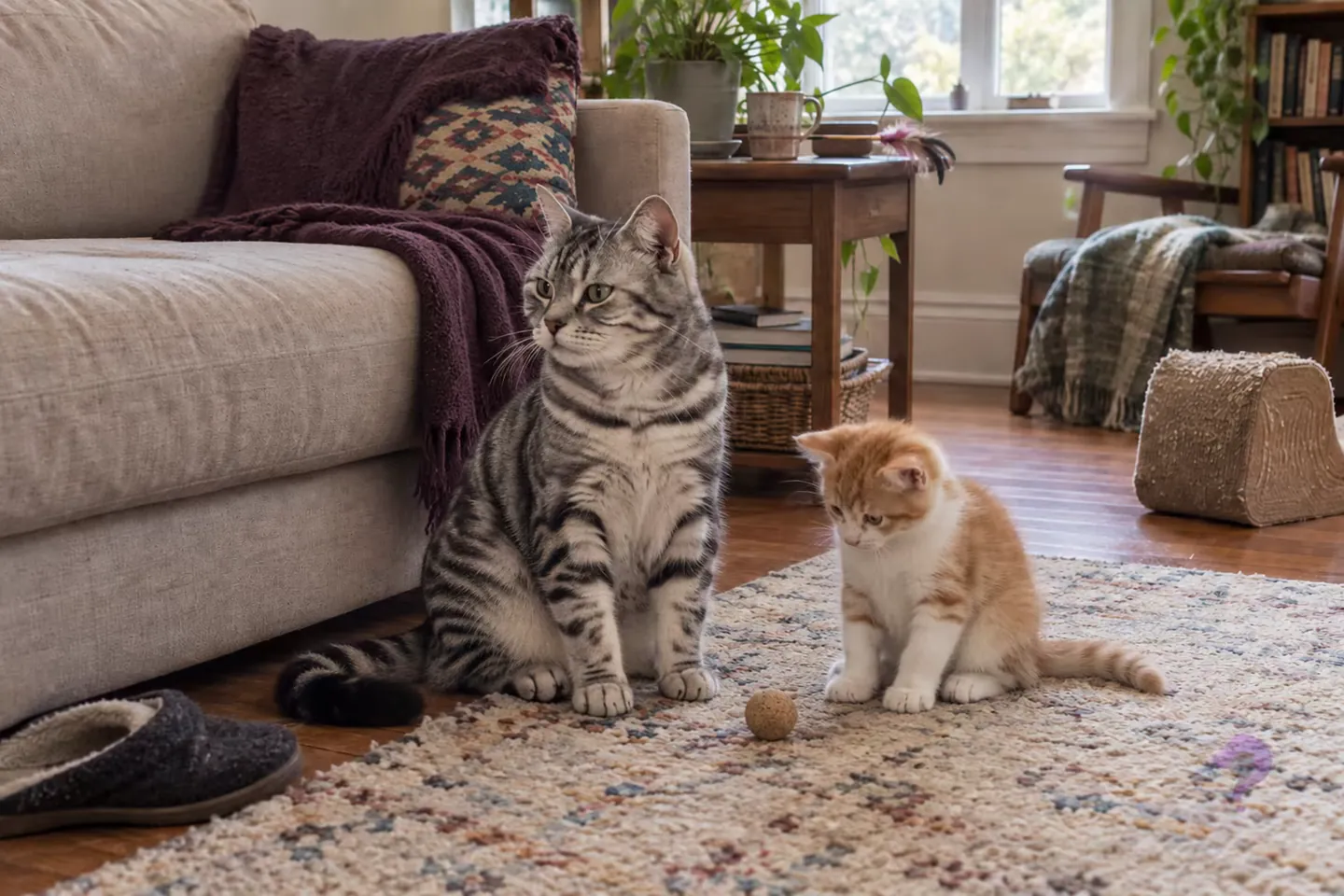
The short answer: kittens need more time, while adult cats are easier to get to know
An adult cat is often the easier choice if you want a clearer idea of their personality, energy level, and likes before they come home. A kitten may suit you if you have time for several play sessions a day, close supervision, kitten-proofing, and a busy first year of vet care.
This is only a starting point. Some adult cats climb the curtains. Some kittens are quiet and cautious. The individual cat still matters more than their age.
Ask yourself what you can realistically manage on a normal weekday, after the excitement of bringing a new cat home has worn off.
What everyday care can look like
Use this table to work out what each option may ask of you, then meet the individual cat before deciding.
| What changes | Kitten | Adult cat |
|---|---|---|
| How much you know about them | Their personality is still developing, so a playful kitten may grow into a very different adult | Their personality is usually clearer, especially if a rescue or previous carer knows them well |
| Supervision | Frequent checks and active kitten-proofing; small bodies reach gaps and hazards adults may ignore | Usually less constant supervision, though every new cat still needs a safe settling room and gradual access |
| Play and activity | Short, energetic play sessions throughout the day, with safe outlets for climbing, chasing, scratching, and learning | Still needs daily play and enrichment, but the preferred style and pace may be easier to observe |
| Children | Fragile, quick, and easily overwhelmed; young children need calm, close adult supervision | A known calm adult with a suitable history may be easier to match, but age alone does not make a cat child-safe |
| Pets already at home | May appear less threatening to an adult cat, but constant attempts to play can be stressful | You may know more about how they behave around other animals, but introductions still need time and separate food, water, beds, and litter trays |
| Early costs | Often several appointments and decisions close together, including vaccinations, parasite care, microchipping, and neutering as advised locally | A rescue may already have completed some routine care, but confirm what is included and budget for ongoing health needs |
| Length of commitment | Potentially 15 to 20 years or more | Could still be many years, so plan to care for them for the rest of their life |
A kitten turns your home into a playground, including the bits you missed
Kittens explore with speed, teeth, claws, and very little sense of consequence. The gap behind the washing machine, a blind cord, a tilted window, a houseplant, a hot hob, and a loose thread can all become interesting before you have finished making coffee.
You will probably need to kitten-proof more than once. Get down to kitten height. Secure windows and balconies, block unsafe gaps, tidy cables and string, check plants and household products, and keep appliances closed. Give the kitten safe places to scratch, climb, hide, use the toilet, and play.
Many kittens already know how to use a litter tray, but moving to a new home can lead to accidents. Ask which tray and litter they know, and start with something familiar. Put a clean tray in a quiet, easy-to-reach place away from food and water. Show the kitten where it is when they arrive, and remind them after sleep or meals if needed.
Never punish a mistake. Clean it up calmly and check that the tray is suitable. Speak to the rescue or your vet if accidents continue or the kitten seems unwell. Along with frequent meals, play, and supervision, this makes the first few weeks with a kitten more hands-on than life with many adult cats.
Play with fishing-rod style toys and other safe toys, not your hands or feet. The tiny pounce that seems funny now is less charming when an adult cat has learned that skin is a toy. Put toys with strings away after supervised use.
Energy arrives in bursts, not on your calendar
A kitten may race through the room, fall asleep, wake up ready to climb, and repeat the cycle when you hoped to work or rest. They need frequent suitable play and gentle interaction, but they also need uninterrupted sleep and the choice to retreat.
If everyone is out for long days, a very young kitten may be the wrong fit. Blue Cross notes that young kittens need substantial company and should not be left alone for a whole day. An adult cat may cope better with a working household, but “adult” does not mean content without attention. Daily play, feeding, litter care, observation, and companionship still belong in the plan.
Picture an ordinary Tuesday rather than your first weekend together. Who plays before work? Who notices if breakfast is untouched? Who handles the evening energy when the household is tired?
With an adult cat, you usually know more about what to expect
An adult cat's personality is generally more established. A good rescue or previous carer may be able to tell you whether the cat seeks laps or prefers nearby company, how they play, what frightens them, whether they have lived with children or animals, and how they manage indoor life.
That history helps, but a cat may behave differently after settling into your home. Pain, fear, noise, and a new environment can all affect what you see. Ask how long the rescue has known the cat, where they observed the behaviour, and what they still do not know.
An adult may still scratch furniture, wake you, dislike handling, hide for days, or need energetic play. “More predictable” should never turn into “effortless.”
A kitten is not guaranteed to grow into a lap cat
A kitten who climbs into your lap may grow into an independent adult. A shy adult may become deeply affectionate after weeks or months of feeling safe. Another cat may show trust by sleeping nearby rather than being held.
Pay attention to how the cat likes to spend time with people now, while remembering that this may change. Do not force contact to test whether they are cuddly. Let the cat approach, watch their body language, and ask the rescue how they seek attention when relaxed.
If you really want a lap cat, an adult with a known history gives you more useful information than a kitten's behaviour during one exciting visit. There is still no guarantee.
For children, the individual cat matters more than age
Kittens are small and fragile. Young children can frighten or hurt them without meaning to, while kitten teeth and claws can hurt a child who tries to grab, chase, or cuddle. An adult must supervise every interaction and give the cat routes to leave.
A calm adult cat with a known positive history around children may suit some families better. A confident kitten may suit a gentle household with older children and adults who have time to teach both sides. The right answer depends on the particular cat and child, not the idea that they should grow up together.
Give the cat a quiet refuge that children do not enter. Teach children to sit low, offer a toy at a distance, and stop when the cat walks away. Whatever the cat's age, children should not pull their tail, corner them, pick them up without guidance, or force a hug.
Let the resident cat have a vote
Do not choose a kitten simply because you think your cat needs a baby to look after. Cats Protection notes that cats often prefer to live alone, and a kitten's constant attempts to play can exhaust an adult who values quiet.
A kitten may initially feel less threatening than an unfamiliar adult, but introductions still need a separate room, scent exchange, controlled visual contact, multiple resources, and a pace set by the cats. The resident cat needs places the kitten cannot reach and a routine that does not vanish when the newcomer arrives.
An adult cat that has lived peacefully with other cats may be a better choice than a kitten. It may also be kinder not to add another cat at all. Read the one pet or two guide before deciding.
A kitten's first year usually means more vet visits
A kitten's first months usually include several vet visits and decisions about vaccinations, parasite prevention, microchipping, neutering, diet, growth, teeth, safe travel, and outdoor access. The timing and legal requirements vary by country and by the kitten, so register with a vet promptly and follow their advice.
Ask for written records before adoption or purchase. Do not assume a first vaccine means the course is complete, that a microchip is already registered correctly, or that a seller's health claim replaces a veterinary examination.
An adult may arrive with more of this routine care completed, especially from a reputable rescue. They still need a health history, regular vet care, insurance or savings, and a plan for unexpected illness. Use the pet-cost guide to compare the busy first year with the years after it.
An older adult can be the right first cat
Older cats are often overlooked because people worry that calm means dull or that age guarantees illness. Neither is fair. Many mature cats still play, explore, and form close relationships, while their pace and preferences may be easier to match with a quieter home.
Age does change the questions. Ask about mobility, dental care, blood and urine checks, medication, insurance exclusions, litter access, grooming, and how the home might need to adapt. Low-sided trays, warm resting places, steps to a favourite window, and shorter play sessions can make daily life easier.
Do not assume an older cat offers only a brief commitment. You cannot predict lifespan from an adoption profile, and every cat deserves a plan for routine care, emergencies, moving, travel, and their whole remaining life.
Ask what this cat is really like
Whether the cat is ten weeks or ten years old, where they come from matters. A reputable rescue should explain what it knows about the cat's health and behaviour, what kind of home may suit them, and what help is available if things do not work out.
If you are buying a kitten, see the kitten with their mother in the place where they were raised. Ask about age, health records, socialisation, diet, litter, handling, the rest of the litter, and any relevant health testing. Walk away from pressure, secrecy, delivery-only arrangements, or a seller who will not let you see the home environment.
The rescue-pet guide explains what to ask and how much you can reasonably expect a rescue to know.
- What has this cat been like on an ordinary day, not just during this meeting?
- Where has the rescue seen this behaviour: in a home, a foster home, or a rescue pen?
- How does the cat respond to handling, visitors, children, other cats, and dogs?
- What play, litter, scratching, feeding, and sleeping routines are familiar?
- What health care has been completed, and can I see the records?
- Is the cat bonded to another cat or accustomed to living alone?
- Who can I contact, and can the cat return to the rescue, if the match does not work out?
Signs a kitten may fit your life
A kitten may be a good match when someone reliable is around for frequent care, the home can be thoroughly kitten-proofed, and you enjoy active play and patient teaching. You also need to be comfortable with uncertainty about adult personality, size, activity, coat, and preferences.
Your plan should still work when the kitten becomes a strong, confident adult. If you only want the baby stage, do not get a kitten.
Signs an adult may fit better
An adult may suit you if you want to know more about a cat's personality and usual routine, work outside the home, have calm children, or need to find a careful match for a pet already at home. Adult cats are also often passed over while kittens attract attention quickly.
Choose the individual, not a stereotype. A lively two-year-old may need more play than a thoughtful kitten. A shy adult may need a slower settling period than either.
When to wait
Wait if nobody can provide the supervision a kitten needs, the home cannot be made secure, or the budget covers adoption but not veterinary care. Wait if a resident cat is already stressed, a child cannot yet give an animal space, or the decision depends on the cat becoming affectionate, quiet, or easy.
Use questions to ask before getting a pet to check housing, time, allergies, travel, backup care, and whether everyone at home agrees. If the practical plan does not work yet, it is kinder to wait.
Kitten-or-adult decision checklist
Use this checklist before reserving, adopting, or buying a kitten or adult cat.
This guide can help you prepare, but it cannot tell you whether a particular cat is right for your home. Age affects care, activity, and how much you may know about a cat, but it does not guarantee personality, affection, behaviour, or compatibility. Ask a reputable rescue and your vet about the individual cat.
Common questions
Is a kitten or adult cat better for a first-time owner?
An adult cat is often easier to choose because you may know more about their personality and usual routine. A kitten can still suit a first-time owner who has time for close supervision, frequent play, kitten-proofing, and early veterinary care.
Can I leave a kitten alone while I work?
A very young kitten should not be left alone for a full working day. They need regular meals, checks, play, company, and a safe environment. Ask the rescue and your vet what is appropriate for that kitten's exact age and needs.
Will an adult cat be less affectionate than a kitten?
No. Affection depends on the individual cat, their history, health, trust, and preferences, not simply age. You may know more about an adult cat's usual behaviour, but nobody can guarantee a lap cat.
Is a kitten easier to introduce to my current cat?
Sometimes a kitten initially feels less threatening, but their constant play can stress an adult cat. Whether you choose a kitten or an adult, introductions should be slow, with separate food, water, beds, and litter trays, plus places where each cat can get away.
Are adult cats already trained?
Many adult cats already use a litter tray and scratching post, but do not assume every habit will transfer perfectly to a new home. Ask what the cat is familiar with and provide suitable, well-placed resources from the first day.
Should I adopt an older cat?
An older cat can be an excellent match for a quieter household, and their preferences may be easier to understand. Ask about current health, mobility, insurance, medication, and home adaptations, while remembering that older cats still play and may have many years ahead.
Sources and further reading
Welfare and care statements on this page are informed by publicly available guidance from recognised animal-welfare organisations. Always check current advice for your location.
- Choosing the right cat for you - Cats Protection
- Bringing a new kitten home - Cats Protection
- Should I get a cat? - Blue Cross
- Introducing cats and kittens - Cats Protection
- Buying a kitten - RSPCA
- Elderly cats - Cats Protection
- Caring for your new kitten - International Cat Care
Want a more personal answer?
What?Pet™ helps compare pets around your home, routine, budget, allergies, noise, and care needs.
Get the app